


The educational landscape of 2026 has moved far beyond the traditional “factory model” of the 20th century. We have entered an era defined by a powerful duality: the integration of Artificial Intelligence (AI) and the elevation of unique Human Skills. This synergy is not merely a technological upgrade; it is a fundamental restructuring of how knowledge is acquired, processed, and applied in a globalized, digital-first economy.
1. The Death of Rote Learning and the Rise of “Human-Centric” Skills
For decades, education was measured by the ability to store and recall information. In the age of AI, where the world’s collective knowledge is accessible in milliseconds, the “memory-based” curriculum has become obsolete. Instead, the modern system prioritizes high-level cognitive skills that AI cannot easily replicate.
-
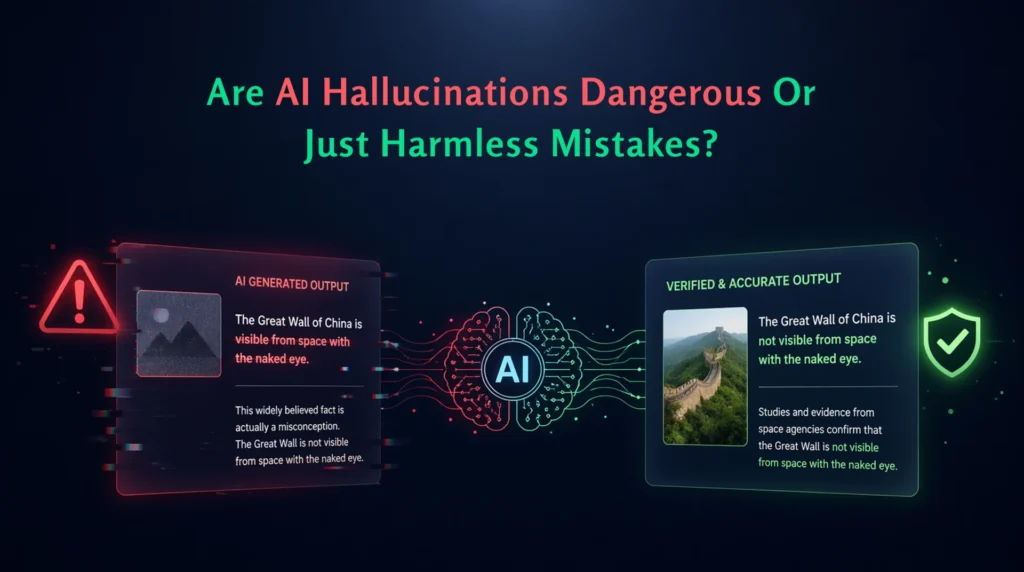
Critical Evaluation and Algorithmic Literacy: With the proliferation of AI-generated content, the ability to discern truth from hallucination is a vital survival skill. Students are now trained to act as “editors-in-chief” of AI outputs, auditing data for bias, logical fallacies, and ethical implications.
-
The Emotional Intelligence (EQ) Premium: As technical tasks become automated, “soft skills” have become the new “hard skills.” Empathy, cross-cultural collaboration, and ethical leadership are now core subjects, recognizing that the most complex global problems—from climate change to economic disparity—require human-centered solutions.
2. AI as a Personalized Scaffolding System
The most significant breakthrough in 2026 is the end of the “one-size-fits-all” classroom. AI now acts as a dynamic scaffolding that supports each student’s unique learning curve.
-
Hyper-Personalized Learning Paths: Modern AI tutors analyze a student’s interaction patterns—their reading speed, the complexity of the questions they ask, and even their frustration levels—to adjust the curriculum in real-time. This ensures that every learner remains in a state of “optimal challenge,” preventing both boredom and burnout.
-
Accessibility and Global Equity: AI is bridging the gap for students in regions with teacher shortages. High-quality, interactive instruction is no longer a luxury of the elite; it is a scalable utility that provides technical and linguistic training to anyone with a satellite connection.
3. Financial Strategy and the Entrepreneurial Mindset
Education in 2026 is increasingly practical, aligning academic growth with financial and professional independence. This is particularly relevant for the new generation of digital entrepreneurs and investors who view education as a capital asset.
-
Strategic Asset Allocation of Time: Students are taught to treat their learning as an investment portfolio. Just as a savvy investor diversifies across sectors, a modern student diversifies their “skill portfolio,” balancing technical AI proficiency with creative strategy.
-
Integrating Fiscal Literacy: Understanding the “business of education” is now part of the curriculum. This includes navigating tax policies and incentives that reward lifelong learning. For instance, many forward-thinking jurisdictions offer tax credits for investments in certified “Future-Proof” skills, allowing learners to optimize their financial position while they study.
4. A Comparison of Educational Paradigms
| Feature | The Industrial Model (Past) | The AI-Skill Synergy (2026) |
| Primary Goal | Standardization & Compliance | Innovation & Personal Mastery |
| Assessment | Periodic High-Stakes Exams | Continuous, Data-Driven Feedback |
| Knowledge Source | The Teacher/Textbook | A Globalized Digital Ecosystem |
| Skill Focus | Memorization & Procedures | Strategy, Creativity, & AI Harmony |
| Career Path | Linear (One Degree, One Career) | Multidimensional (Continuous Upskilling) |
5. Immersive Skill Acquisition and the “Virtual Frontier”
The barrier between theory and practice has vanished thanks to the integration of AI with Immersive Technologies (VR/AR). Students are no longer just reading about biology or business; they are experiencing it.
-
Simulated Real-World Environments: An aspiring investor can manage a virtual stock portfolio in a high-fidelity simulation that mimics 50 years of market volatility in a week. A medical student can perform complex procedures on an AI-driven digital twin, receiving haptic feedback and real-time corrections.
-
Global Collaboration: Classroom walls have been replaced by digital “hubs.” A student in Lahore can collaborate on a sustainable engineering project with a peer in Ireland, using AI-powered real-time translation to eliminate language barriers.
6. The Sustainable Learning Ecosystem
Finally, the modern system recognizes that education is a lifelong journey, not a destination. The “degree” has been replaced by the “living portfolio”—a blockchain-verified record of a person’s evolving skills, projects, and AI collaborations.
This shift toward sustainability also applies to the physical environment. Schools and training centers are evolving into “Green Hubs,” utilizing AI to optimize energy consumption and teaching students the benchmarks of sustainable production and global trade.
Conclusion: Embracing the Hybrid Intelligence
The modern education system of 2026 is defined by a partnership. It is a world where AI handles the heavy lifting of data and repetition, while humans provide the vision, the ethics, and the creative spark. By focusing on the synergy of AI and Skills, we are not just preparing students for jobs; we are empowering them to be the architects of a more intelligent, efficient, and compassionate future.