


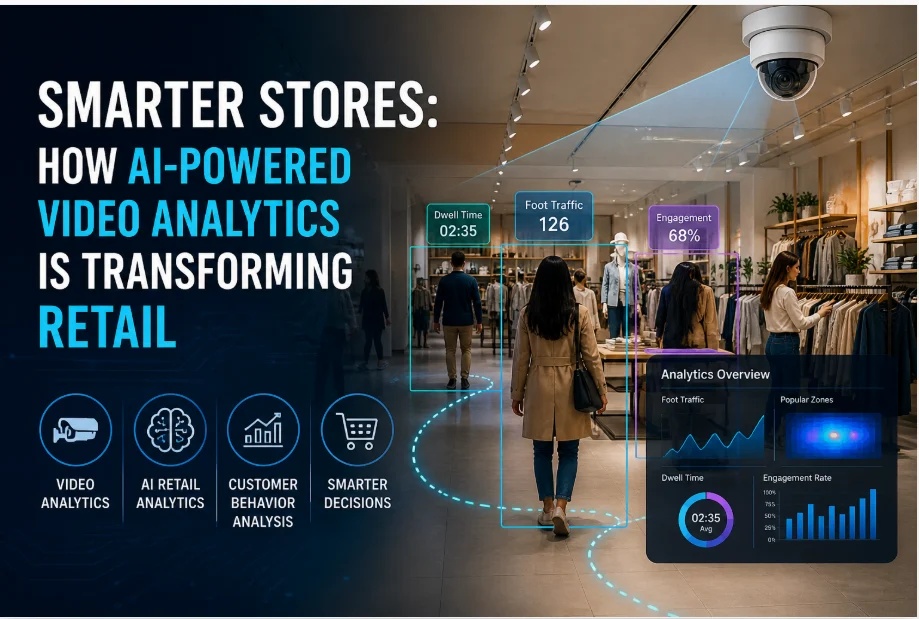
Artificial Intelligence and data analytics are transforming the way consumers shop for goods and services inside traditional brick-and-mortar stores, enabling retailers to be much more efficient and productive in their operations than ever before through the use of Video Analytics For Retail Stores technology that converts traditional security cameras into intelligent systems that can understand where and how customers are engaging with products so that the retailers can provide more effective layouts and ultimately better performance for the business overall; this will give retailers an advantage over their competition in a world that is becoming increasingly data-driven.
What Is Video Analytics in Retail?
Video analytics in retail store sector consists of employing both machine learning and computer vision technology to help analyze recorded images off of in-store cameras. Historically cameras were employed only to be used for safety and security reasons; however, now they have two functions. They still support safety, but data collected from images taken using these cameras provide organizations insight into how customers interact with their products and their store.
Video analytics technology is capable of tracking the volume of foot traffic through the use of sensors, how long customers have been present in certain areas with the ability to define “hot” / “cold” locations, whether or not customers wait in line for extended periods of time to buy a product, etc. Using video analytics Retailers do not need to solely depend upon their sales data or manual observation for measuring customer engagement in real time.
Enhancing Customer Behavior Analysis
To develop an effective retail strategy, organisations must analyse their customers’ actions throughout the buying cycle. Analysing videos is one way to obtain additional insight into customer behaviour compared to using POS data. Some different types of information that video analysis can provide include: how customers navigate through each aisle in a store, what types of displays draw a customer’s attention, and at what point customers lose interest in an item or product after viewing, etc.
This data helps retailers answer critical questions:
- Which store sections receive the most traffic?
- Are promotional displays effectively engaging customers?
- Where do bottlenecks occur during peak hours?
By analyzing these patterns, businesses can redesign layouts, reposition products, and create a more seamless shopping experience. Over time, this leads to higher customer satisfaction and increased sales.
The Role of Video Analytics in Retail Analytics
AI retail analytics applies predictive and prescriptive insights to video data, going beyond simply reporting historical events to providing advice on how businesses can proceed in the future.
For example, AI can help in the following ways:
- Predicting peak shopping hours and optimizing staffing
- Identifying underperforming locations within a store
- Recommending product placement based on how consumers engage with products
- Similarly identifying abnormal behaviours in a crowd or possible theft
The transition from reactive to proactive decision making is what enables AI to be such a great resource for retailers, allowing them to respond promptly to emerging trends and update their strategies in near real-time.
Improving Store Operations
Video analytics in Retails benefit marketing and merchandising alike in addition to improving operational efficiencies. An example of this is queue management. Systems can help managers monitor checkout lines to see whether wait times at checkout counters exceed a set threshold, and then they can notify staff so that additional checkout counters are opened.
Shelf monitoring can ensure that products are always in stock and on display at appropriate levels. More sophisticated systems can detect when products are out of stock or incorrectly placed on shelves and trigger restocking alerts.
Using these efficiencies allows retailers to lower their labor costs, reduce lost sales opportunities and improve the overall customer experience through quicker turnaround times.
Personalization and Customer Experience
Video analytics enables retailers to offer individualized experiences to today’s consumers. By retaining privacy and compliance through the use of anonymous, non-identifiable data, retailers are able to analyze multiple trends including repeat customer activity (i.e., returning to the shop), popular timeframes for returning customers to make purchases, and common characteristics ascribed to the shopper base.
The retailer can then create tailored promotions and other store characteristics and/or offerings to match the consumers’ expectations as well as increase sales at those times (i.e., if younger people tend to shop at a certain place, generate marketing campaigns to target younger consumers). This results in a more enjoyable and relevant shopping experience for the consumer, and they will return to shop again.
Challenges and Considerations
The implementation of video analytics in retail has many benefits but also presents some challenges. A significant challenge for retailers has been the issue of how to respect privacy and remain compliant with laws for protecting data. Retailers need to be transparent with consumers regarding data use and implement strong data security measures to reduce potential for loss of data.
Another challenge is the initial capital requirement involved in acquiring a video analytics AI system and building the supporting infrastructure. While the initial cost can be one of the largest challenges, many retailers have found that cost savings achieved over time through improved efficiency, increased sales, and enhanced customer satisfaction are worth the original investment.
The Future of Retail Analytics
As technology keeps developing, video analytics will also advance. The combination of video with other types of data—like mobile application usage, loyalty card programs and online browsing behaviour—creates a comprehensive perspective of the customer journey.
AI Retail Analytics will eventually use real-time video analytics to change their stores automatically and in accordance with a customer’s needs. For instance, digital signage can be dynamically altered, as will product recommendations. Retailers will continue to lose the distinction between physical and digital retail, producing a completely integrated shopping experience.
Conclusion
Video analytics for retail stores, combined with AI-driven insights, is redefining how businesses understand and serve their customers. By turning visual data into actionable intelligence, retailers can optimize operations, enhance customer experiences, and stay ahead in a competitive landscape.
Those who embrace this technology early will not only improve efficiency but also build stronger, more meaningful connections with their customers—an advantage that is increasingly vital in today’s retail world.