


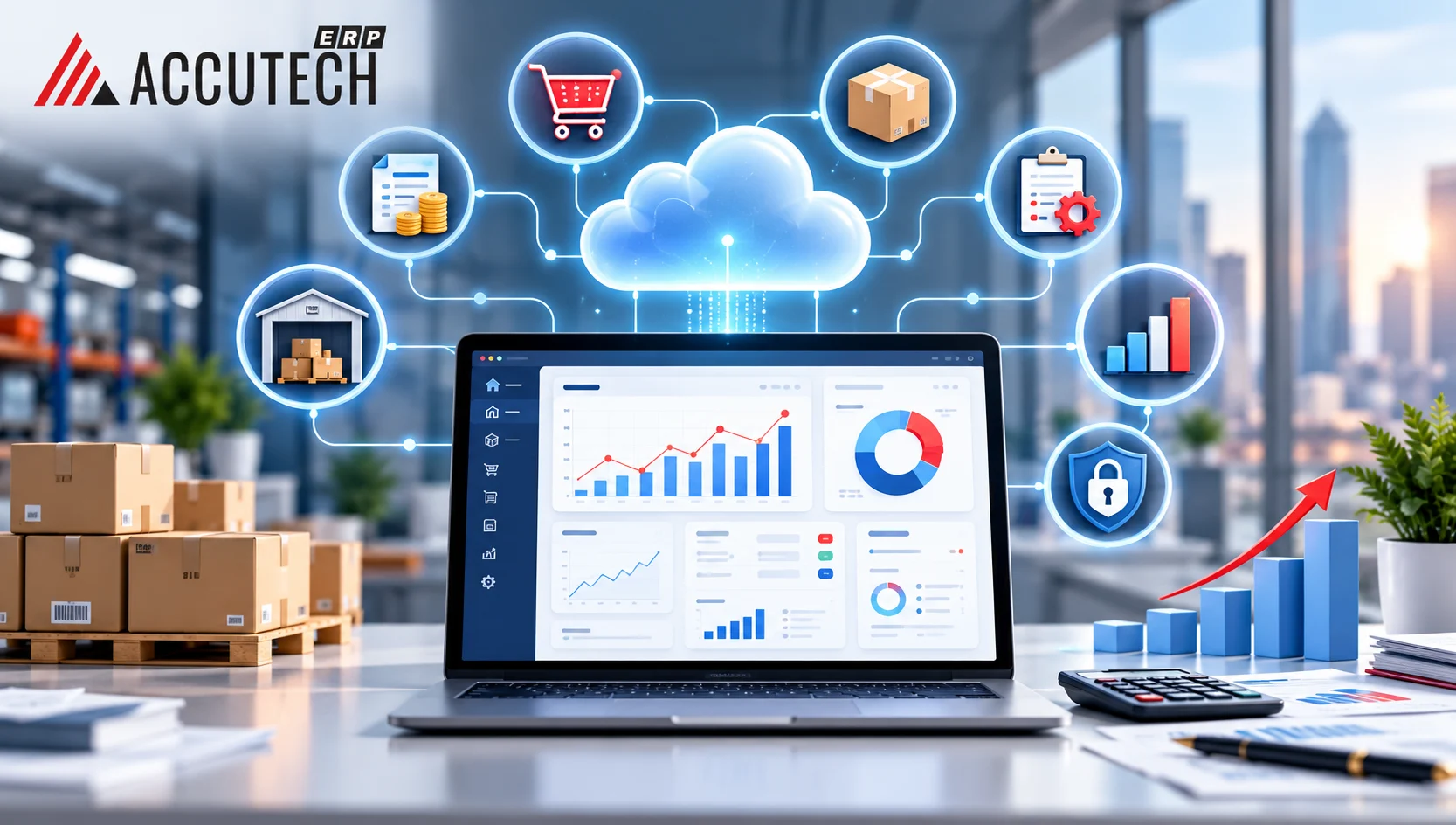
Managing accounting, inventory, sales, purchases, and financial records becomes more challenging as a business grows. Traditional accounting methods may work for small operations, but expanding businesses require better visibility, automation, and control over their daily activities.
A cloud erp accounting system provides businesses with a centralized platform to manage financial and operational processes efficiently. Instead of depending on multiple software applications or manual records, companies can connect accounting with inventory, sales, purchases, reporting, and other important business functions.
Centralized Accounting and Business Management
One of the biggest advantages of ERP technology is centralized data management. When departments use separate systems, information may not always remain updated across the organization.
With a cloud erp accounting system, financial transactions and related business activities can be recorded within one connected platform. This helps accounting teams access sales, purchase, inventory, payment, and outstanding information without maintaining unnecessary separate records.
Centralized information can also reduce duplicate data entry and make daily financial management more organized.
Better Financial Visibility
Growing businesses need quick access to accurate financial information. Management should be able to understand receivables, payables, expenses, sales, purchases, and overall business performance without waiting for multiple reports to be manually prepared.
A cloud erp accounting system helps businesses maintain updated financial records and generate useful reports for management. This improves visibility into business operations and allows decision-makers to review financial information more efficiently.
Businesses can also monitor customer outstanding amounts, supplier balances, transaction history, and accounting reports from a single platform.
Improved Inventory and Accounting Coordination
Inventory and accounting are closely connected, particularly in manufacturing, FMCG, pharmaceutical, and trading businesses.
Purchases increase inventory, sales reduce stock, returns affect financial balances, and production activities influence material consumption and finished goods. When these processes are handled separately, differences between physical stock and accounting records may occur.
Using a cloud erp accounting system allows businesses to connect inventory transactions with their financial processes. This creates better coordination between accounts, stores, purchase, sales, and management teams.
Reduce Manual Work and Accounting Errors
Manual data entry takes time and can increase the possibility of mistakes. Incorrect amounts, duplicate records, missed entries, or delayed updates can affect financial reports.
ERP software can automate many repetitive processes and help maintain consistent records throughout the organization. A cloud erp accounting system can streamline invoicing, purchase recording, ledger management, taxation-related data, outstanding tracking, and financial reporting.
By reducing repeated manual work, businesses can allow their accounting teams to focus more on verification, analysis, compliance, and financial planning.
Access Business Information More Efficiently
Modern businesses often operate through different departments, branches, warehouses, or locations. Management therefore needs a system that provides better access to business information.
Cloud-based ERP solutions make it easier for authorized users to access relevant business data according to their permissions. This can help owners, accountants, sales teams, and managers stay connected with business operations while maintaining structured access control.
The right ERP platform can also support businesses as their transaction volume and operational requirements increase.
Choosing the Right ERP Accounting Solution
Every business has different accounting and operational requirements. Before selecting ERP software, businesses should consider factors such as accounting functionality, inventory management, sales and purchase workflows, reporting, user permissions, taxation requirements, scalability, and support.
A reliable cloud erp accounting system should not only manage accounting but should also help connect different business functions for better operational control.
Accutech ERP provides ERP solutions designed to simplify accounting and business management processes for growing organizations. Businesses can manage important operational and financial activities through a more structured and integrated system.
Conclusion
ERP technology can help businesses move from disconnected processes toward centralized and efficient business management. By connecting accounting, inventory, sales, purchases, and reporting, organizations can improve visibility, reduce manual work, and maintain better control over daily operations.
Choosing the right ERP solution can help a growing business build a stronger foundation for accurate financial management and long-term operational growth.
Best Advance Accounting ERP Software
Accutech ERP’s Advance Accounting solution helps businesses manage accounting, financial transactions, receivables, payables, reporting, sales, purchases, and other important financial activities through an integrated ERP platform.
Pharma PCD ERP Software
Accutech ERP’s Pharma PCD ERP Software helps pharmaceutical businesses manage products, distributors, sales, purchases, inventory, accounts, outstanding payments, and other operational requirements through a centralized business management system.