


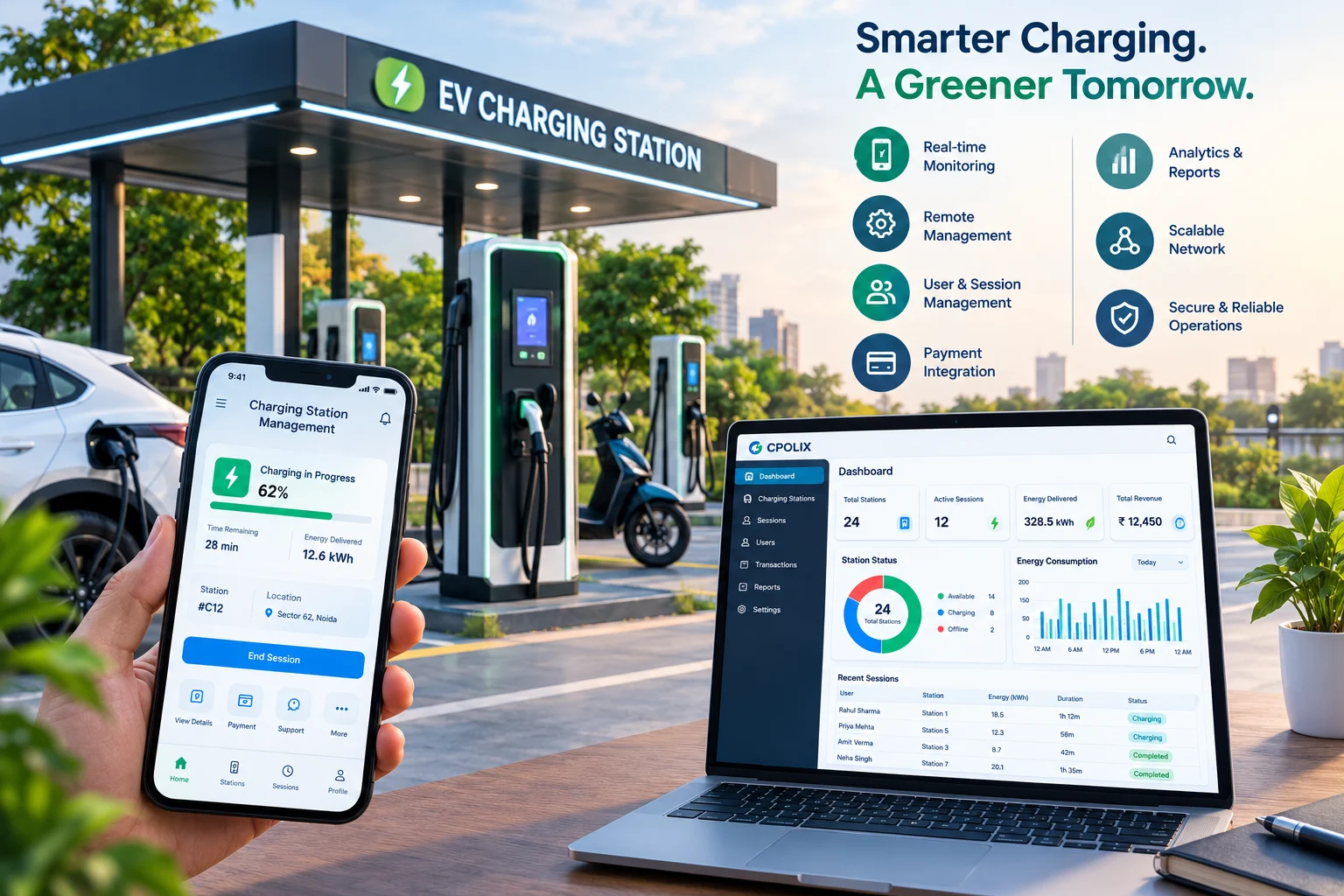
The growth of electric vehicles is creating a strong demand for reliable and efficient charging infrastructure. As more electric cars, scooters, bikes, and commercial vehicles move onto the roads, charging businesses need more than just physical charging stations. They need technology that can help them monitor stations, manage users, track charging sessions, handle payments, and understand how their infrastructure is performing. This is where smart charging software is becoming an important part of the EV ecosystem.
A Charging Station Management System app can bring multiple charging operations together through a centralized platform. Instead of checking individual stations manually, operators can use a single system to monitor their charging network and access important information in real time. This becomes particularly useful for businesses operating multiple charging points across different locations.
Why Smart Charging Management Matters
Managing a growing charging network manually can become complicated. Operators need to know which chargers are available, which ones are currently being used, and whether any station has stopped working. A centralized software platform can provide a clearer view of the entire network and help businesses respond to operational issues more quickly.
Some important capabilities of smart charging software include:
- Real-time charging station monitoring
- Remote charger management
- User and session management
- Digital payment and transaction tracking
- Charging usage analytics
- Station availability monitoring
- Alerts for operational issues
- Centralized network management
These features can help charging operators reduce manual work while maintaining better visibility over their infrastructure.
Real-Time Monitoring for Better Operations
One of the biggest challenges for charging operators is knowing what is happening at every station. A charger might be occupied, available, offline, or experiencing a technical issue. Without centralized monitoring, identifying such problems can take valuable time.
Modern charging software allows operators to monitor charging activity through a centralized dashboard. They can check station status, view active sessions, and identify potential problems without visiting every physical location. This can be particularly useful for businesses managing charging stations across multiple areas.
Real-time monitoring can also contribute to a better experience for EV users. When operators have better visibility into station status, they can respond to issues and maintain their network more effectively.
Better Management of Charging Sessions
Charging sessions generate useful operational information. Details such as energy consumption, session duration, charging status, and transaction data can help businesses understand how their stations are being used.
Instead of treating each charging session as an isolated activity, operators can use software to organize this information and analyze it over time. This can help identify frequently used stations, peak charging periods, and changing customer demand.
For example, charging businesses can use data to understand:
- Which stations receive the highest usage
- When charging demand is at its peak
- How much energy is being consumed
- Which locations may need additional capacity
- How frequently individual chargers are being used
This information can support better operational and expansion planning.
Remote Management and Maintenance
EV charging stations are often distributed across different locations. Physically checking every station whenever an issue occurs is not practical for larger networks. Remote management can therefore become an important part of charging infrastructure.
Through a connected platform, operators can monitor station activity and access operational information remotely. Alerts can also help teams identify potential issues that require attention. This allows businesses to move toward a more proactive approach instead of waiting for users to report problems.
Connecting Hardware With Software
A modern electric vehicle Charging Station Management System can act as a bridge between physical charging equipment and the digital systems used by operators and customers. This connection allows charging businesses to manage hardware while also handling software-based functions such as user management, analytics, billing, and monitoring.
A connected system can help businesses create a more organized charging ecosystem by bringing different operational activities into one environment. This becomes increasingly valuable as charging networks expand and include equipment from different locations or manufacturers.
Improving the EV User Experience
For EV drivers, a charging station needs to be more than physically available. They also expect a simple and reliable digital experience. Finding a station, checking availability, starting a charging session, and completing payment should ideally be straightforward.
Smart charging platforms can support this experience by connecting users with charging infrastructure digitally. Better station visibility and organized session management can make charging more convenient while giving operators greater control over their network.
Scalability for Growing Charging Networks
A small charging network may be relatively easy to manage, but the requirements can change as more stations are added. Businesses need systems that can support growth without making operations unnecessarily complicated.
Scalable charging software can help businesses manage additional charging points through the same centralized environment. This can make it easier to expand into new locations while maintaining consistent monitoring, reporting, and management processes.
The Role of Data and Analytics
Data is becoming one of the most valuable assets for charging businesses. Every charging session can provide information that helps operators understand their network.
Analytics can help businesses evaluate station performance, customer usage patterns, energy consumption, and revenue-related information. Over time, these insights can support better decisions about maintenance, pricing, station placement, and future expansion.
CPOLIX is working in this space by providing technology designed to help businesses manage and monitor EV charging operations. Its solutions focus on areas such as charging management, network visibility, analytics, and operational control, helping charging businesses work toward a more connected infrastructure.
As electric mobility continues to expand, charging infrastructure will need to become smarter and easier to manage. Software will play an important role in connecting charging hardware, operators, and EV users. From real-time monitoring and remote management to analytics and session tracking, modern charging platforms can help businesses manage their networks more efficiently.
The future of EV charging is therefore not only about installing more chargers. It is also about creating a connected system where charging stations can be monitored, managed, and improved through intelligent software. With the right technology, businesses can build charging networks that are more organized, scalable, and prepared for the growing demand for electric mobility.
