


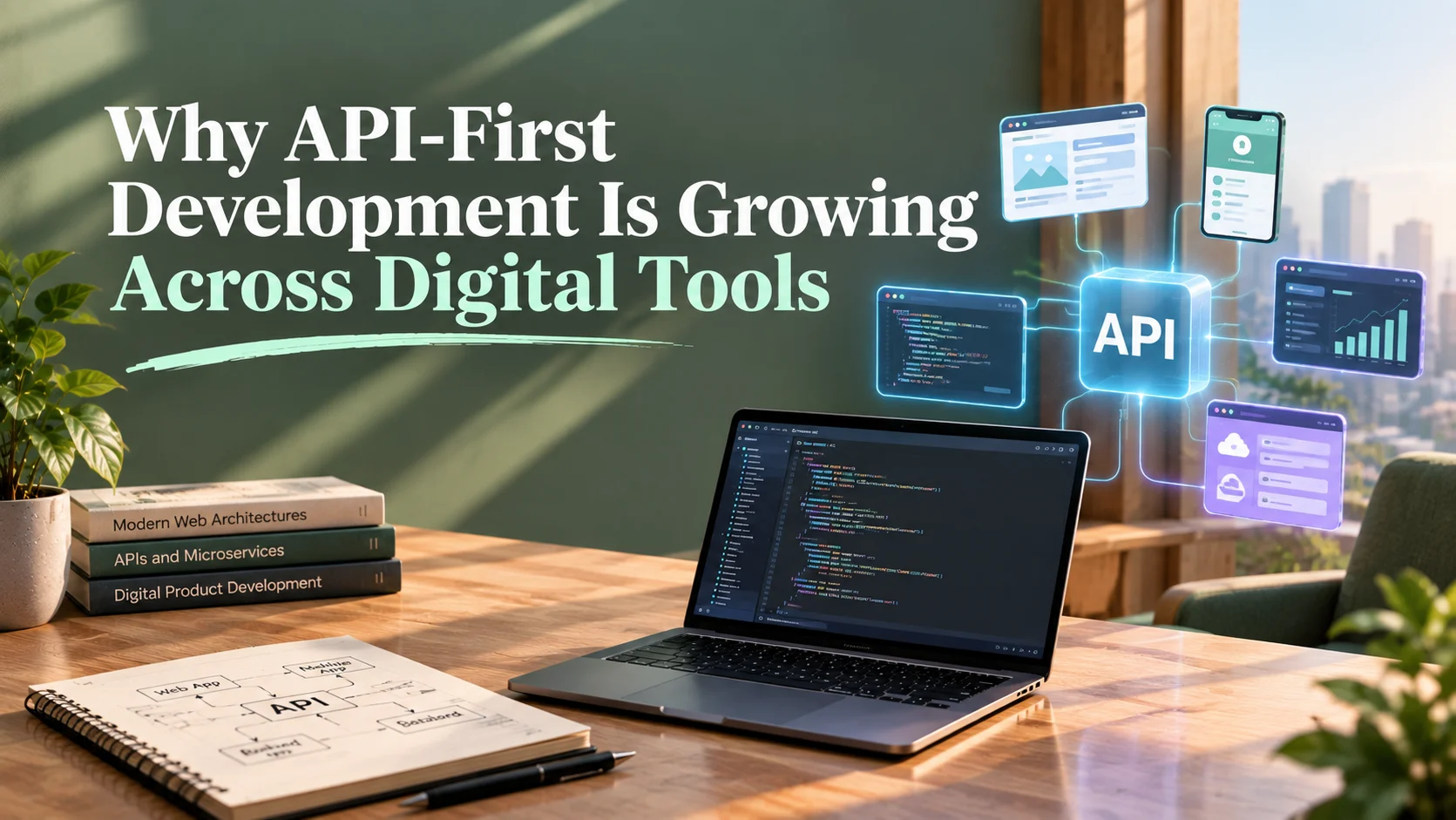
A digital product is no longer targeted at only one screen or one type of client. A company may need to develop a website, a mobile application, an internal dashboard or customer portal, an interface for smart devices, or an integration with a third-party service. All these products may require access to the same data and functions. API-first development offers a practical way to connect these parts of a project before developing the interface.
API-First Development: What Does It Really Mean?
API stands for Application Programming Interface and represents a set of communication tools between two software systems. An application can request customer information, submit an order, check availability, make a payment, retrieve account details, and perform other actions without knowing how the other software system operates.
In an API-first approach, these communication rules are defined at the early stage of product development. Instead of developing a website or application first and adding connections later, developers can define communication rules from the very beginning.
This creates a foundation that can support different digital products. A website, mobile application, staff dashboard, and other platforms can use the same services while presenting data differently.
Digital Products Are Becoming More Connected
Modern businesses may use multiple software solutions at the same time. These can include customer relationship software, payment solutions, inventory software, booking applications, analytical tools, communication systems, and others. All of them may need to share information with each other.
Without an integration plan, connecting these systems can be difficult. One application may require specific data formats, while another may need something completely different. To connect the two applications, special connectors may have to be created.
The API-first approach encourages teams to think about integrations early. The goal is not only to make an application work, but also to provide consistent ways of communicating with other components of the digital ecosystem.
One Backend Can Support Several Interfaces
The main benefit is that core functionalities and presentation layers can be separated. Think about an online store that has both a website and a mobile app. Both may need core functionalities such as products, customers, stock, orders, payments, and more.
Instead of creating different systems, APIs can provide access to the necessary services. The website can display data in one format, while the mobile app can present it in another.
This can make future scaling more convenient. Core services can be reused when developing a new tablet app, partner portal, or another customer-facing system.
Developers Can Work More Independently
API-first design can also improve cooperation between different development teams. Front-end developers can work with defined communication rules, while backend developers can implement the services based on those same rules.
This division can reduce situations where one team has to wait for another team to complete a feature before continuing the development process. Mock responses, documentation, test environments, and defined endpoints can provide enough structure for developers to work independently on their part of the project.
In larger projects, this independence can simplify project management. Teams can separate their responsibilities while still working toward the same technical design.
Changes Become Easier to Manage
Digital products are rarely static after launch. Organizations add new features, improve processes, introduce additional services, or respond to customer demands. A highly integrated application can make every change potentially risky because one modification may affect several unrelated parts of the system.
Good API planning allows clear boundaries to be established between services. Developers can change one element internally without changing the agreed interface used by other systems.
Another advantage is versioning. When significant changes are necessary, older applications can continue using an existing version of the API while newer applications gradually move to an updated version.
Enhanced Integration With Third-Party Services
Many organizations rely on external providers for payments, mapping, email, identification, shipping, analytics, cloud storage, and many other functions.
An Application Programming Interface (API) allows companies to communicate with these external services. The API-first approach encourages developers to consider these connections as part of the overall architecture rather than treating them as a separate task.
This helps identify which information needs to be shared, which access rights are necessary, and how potential errors should be handled. It can also make switching between providers easier when the connection with external services is properly structured. As a result, changing providers may require fewer modifications to the application.
Mobile and Connected Devices Add More Demand
The growth of smartphones, smart displays, wearables, smart appliances, and other internet-connected devices has created more places where digital services can be used.
A company does not always need to develop a completely different backend for every new user interface. APIs can provide access to key functionalities and data across different platforms.
For example, a fitness service provider can provide access to selected account or activity data through its website, mobile application, smartwatch interface, and partner service. Each platform can have its own interface while using shared services underneath.
Security Cannot Be an Afterthought
More connections also mean more areas that need security. Authentication, authorization, encryption, rate limiting, input validation, access control, logging, and monitoring should all be considered during API planning.
Good API design means providing only the data and functions required by a specific API consumer. There is no need to expose functionality simply because it is technically possible.
Testing is also an essential part of the process. An API may work correctly when first launched but become vulnerable when new features or integrations are added without adequate testing.
Documentation Has a Bigger Role
Documentation can greatly improve the usability of APIs. Developers need to understand available endpoints, required information, response formats, errors, authentication methods, and limitations.
Good documentation reduces the need for repeated communication between teams. It can also help external companies work with an application without requiring constant support from the original developers.
The process of creating documentation and running tests can be automated, but the information behind them still needs to remain accurate and updated.
API-First Does Not Mean API-Only
This approach should not be viewed as a solution for every project. A simple website with a limited number of required functions may not need complex API architecture. Adding unnecessary layers can create extra complexity and technical overhead.
The real value becomes clear when a project requires multiple interfaces, several integrations, reusable services, or room for future growth. In such cases, planning communication in advance can help avoid problems later.
As digital products become increasingly connected through websites, apps, services, and devices, API-first development is becoming a practical architectural option. Businesses looking to build connected platforms can benefit from a professional web development company in India with an understanding of API architecture, integration, application security, documentation, and digital product scalability.