


The Growing Importance of Social Media in Customer Relationship Management
In today’s digital-first business landscape, social media has become one of the most influential channels for customer engagement, brand awareness, lead generation, and customer support. Organizations interact with customers across platforms such as Facebook, Instagram, X, and LinkedIn, generating valuable insights every day. However, managing social conversations separately from customer relationship management systems often creates information silos, reducing operational efficiency and limiting visibility into customer interactions.
To overcome these challenges, businesses are increasingly adopting Microsoft dynamics crm social media integration solutions that connect social media activities directly with customer records. This unified approach helps organizations streamline engagement, improve responsiveness, and make better-informed decisions based on comprehensive customer data.
Creating a Unified Customer View
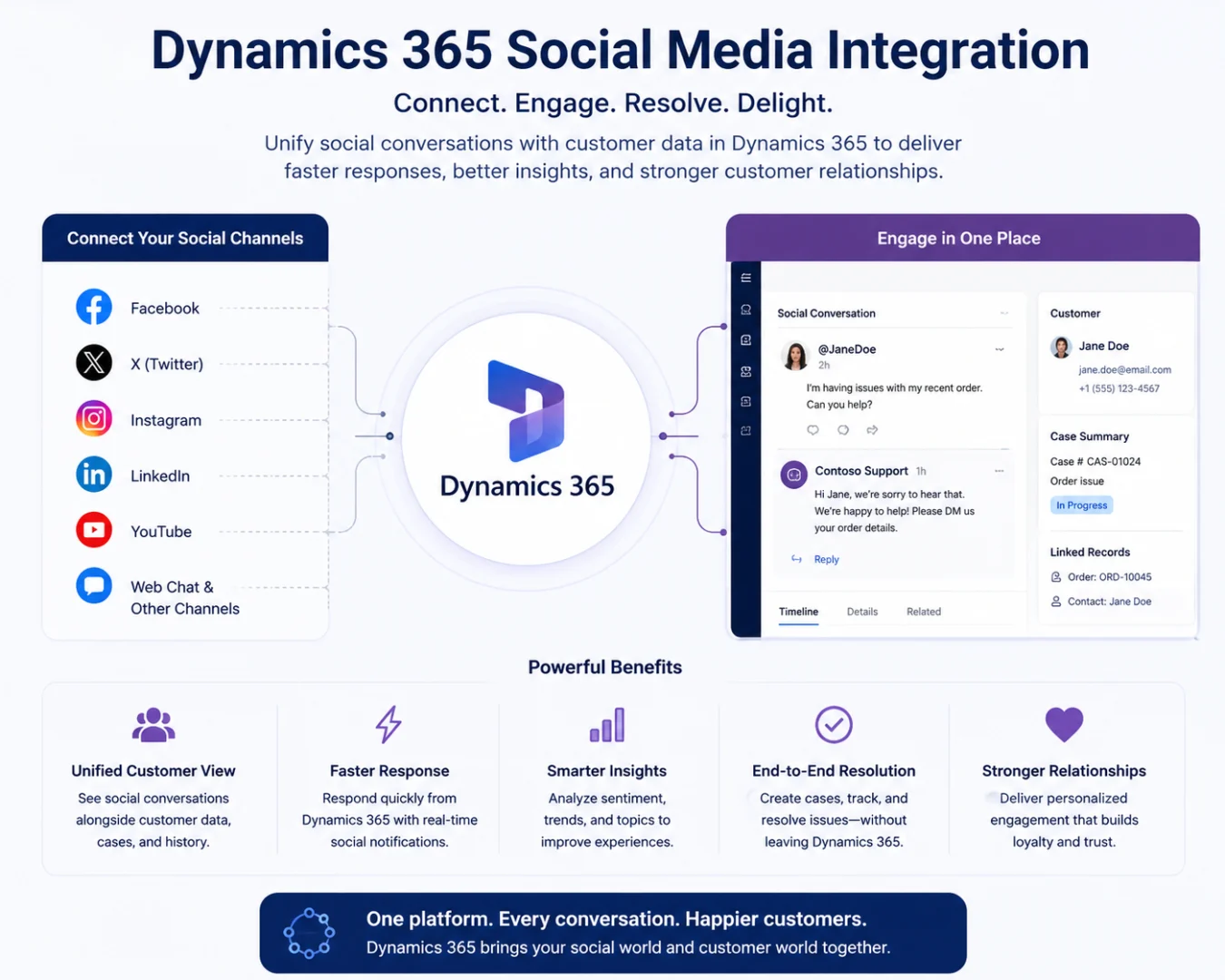
One of the biggest advantages of integrating social media with CRM systems is the ability to create a centralized customer profile. Businesses can capture customer feedback, comments, messages, mentions, and interactions from various social channels and associate them with existing customer records.
With a unified view, marketing teams can better understand audience behavior, sales professionals can identify new opportunities, and customer service agents can access complete interaction histories. This consolidated approach enables organizations to deliver personalized experiences while maintaining consistency across communication channels.
Centralized Management for Greater Productivity
Managing multiple social media accounts can be time-consuming, especially when teams switch between different platforms throughout the day. A centralized approach enables organizations to monitor, manage, and analyze social interactions from a single interface.
By integrating social media capabilities with CRM platforms, teams can schedule content, track engagement, monitor conversations, and manage customer interactions more effectively. This streamlined workflow reduces manual effort and helps employees focus on more strategic tasks.
A centralized environment also improves collaboration between marketing, sales, and customer service teams by providing access to shared customer information.
Leveraging Sentiment Analysis for Smarter Decisions
Understanding how customers feel about a brand is critical for business success. Social media channels provide a constant stream of customer opinions, reviews, and feedback that can influence purchasing decisions and brand reputation.
Integrated platforms use intelligent sentiment analysis to evaluate social conversations and identify positive, negative, or neutral customer sentiments. These insights help businesses recognize emerging trends, address concerns proactively, and capitalize on opportunities to strengthen customer relationships.
Real-time visibility into customer sentiment allows decision-makers to respond quickly and adapt their strategies based on market feedback.
Transforming Customer Service with Automation
Social media has become a primary support channel for many organizations. Customers expect quick responses when they post complaints, questions, or service requests online. Delayed responses can negatively impact customer satisfaction and brand perception.
Through dynamics social media integration services, businesses can automate the process of capturing social interactions and converting them into actionable service cases. Automated workflows ensure that urgent issues are directed to the appropriate support teams without delay.
This automation not only improves response times but also helps organizations maintain high service standards while managing increasing volumes of customer inquiries.
Improving Marketing Performance Through Data-Driven Insights
Modern businesses rely heavily on social media campaigns to attract and engage potential customers. When social media platforms are connected to CRM systems, marketers gain deeper visibility into campaign performance and customer sentiment.
Integrated solutions help organizations track engagement metrics such as likes, comments, shares, and user reactions. This data provides valuable insights into audience preferences, enabling teams to refine marketing strategies and optimize future campaigns. Businesses can also identify positive interactions and convert them into qualified leads, creating a more efficient lead-generation process.
Furthermore, sentiment analysis capabilities allow marketing teams to monitor public perception and respond quickly to changing customer expectations.
Streamlining Customer Support Operations
Customer expectations for rapid responses continue to rise. Many consumers now prefer social media channels for reporting issues, submitting questions, or sharing feedback. Without proper integration, support teams may struggle to monitor and respond promptly to social conversations.
This is where dynamics social media integration services play a crucial role. By connecting social interactions with CRM workflows, businesses can automatically convert customer complaints or service requests into support cases. These cases can then be prioritized, assigned, and tracked within a centralized system.
As a result, support teams can reduce response times, improve issue resolution rates, and enhance overall customer satisfaction.
Empowering Sales Teams with Valuable Insights
Social media platforms provide rich information about customer interests, preferences, and buying intentions. When integrated with CRM solutions, this information becomes a valuable resource for sales teams.
Sales professionals can monitor product mentions, industry discussions, and customer engagement trends to identify potential opportunities. Access to real-time social data enables representatives to initiate timely conversations and build stronger relationships with prospects.
By aligning sales activities with customer behavior and sentiment, organizations can improve conversion rates and create more meaningful interactions throughout the buyer journey.
Conclusion
As customer engagement continues to evolve, businesses need smarter ways to connect social media activities with their customer management processes. Microsoft dynamics crm social media integration enables organizations to bring social interactions, marketing efforts, sales activities, and customer support operations into a single ecosystem.
With the support of advanced dynamics social media integration services, companies can improve visibility, automate workflows, enhance customer experiences, and gain actionable insights from their social channels. The result is a more connected, efficient, and customer-centric business strategy that drives long-term growth.